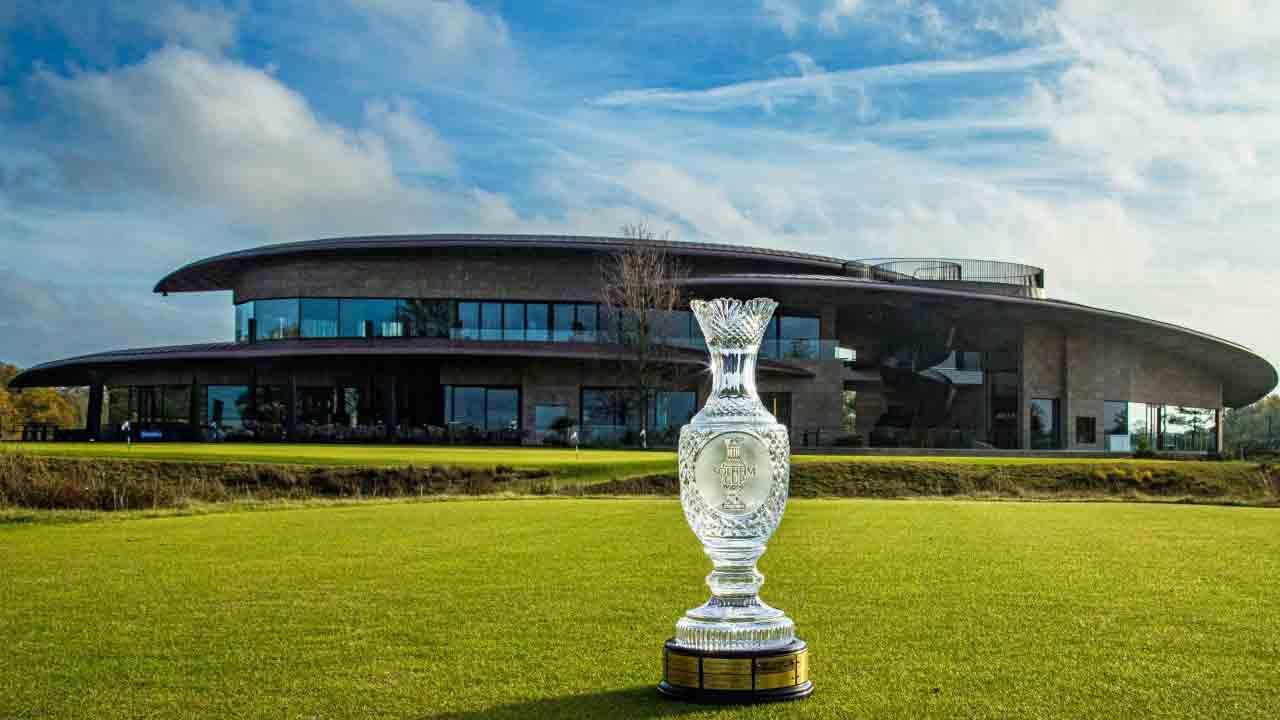
Solheim Cup 2026: USA vs Europe at Bernardus Golf
The Solheim Cup returns to Europe from September 11–13, bringing one of women's golf's biggest rivalries to Bernardus Golf in the Netherlands.
The 20th edition of the biennial competition sees Team USA arrive as defending champions, while Team Europe will look to use home advantage to reclaim the trophy. Unlike a traditional LPGA Tour event, there is no individual leaderboard to chase here. Every match contributes to the team score, partnerships can make or break a session and a single hole can completely change the momentum.
That makes the Solheim Cup one of the most unpredictable events on the women's golf calendar.
Europe Has Home Advantage
The United States currently leads the overall Solheim Cup series 11-8, with the Americans winning the 2024 edition 15.5-12.5. That victory ended a run in which Europe had either won or tied the previous two competitions, including the dramatic 14-14 draw in 2023.
Now Europe has the advantage of playing in front of its home crowd.
Bernardus Golf in Cromvoirt, near's-Hertogenbosch, provides a different challenge from the courses players regularly encounter on the LPGA Tour. The heathland-style course features water hazards and strategically demanding holes where accuracy and course management will be important.
Conditions could also play a role. Wind and rain can alter club selection and approach shots, while the pressure of match play means players have to adapt quickly when circumstances change.
For Europe, the home crowd could provide an extra lift. For the USA, winning away from home would add another layer to an already impressive Solheim Cup record.
Two First-Time Captains
Both teams will be led by captains with significant Solheim Cup experience, even though neither has previously held the role.
Angela Stanford takes charge of Team USA after six appearances as a Solheim Cup player. Anna Nordqvist will lead Europe after making nine appearances as a player and winning three major championships.
Their jobs will involve far more than motivating their teams.
Captains have to decide which players work best together, manage the order of matches and judge when particular partnerships can produce the biggest results. With foursomes, four-ball and singles all requiring different approaches, pairing decisions could prove just as important as individual form.
Nelly Korda Headlines Team USA
World No. 1 Nelly Korda is one of the biggest names on the American roster and brings considerable Solheim Cup experience to the Netherlands.
This will be Korda's fifth appearance. She has won 10 of her 16 previous matches, with a 10-5-1 overall record. Her record in overseas Solheim Cup competitions is particularly impressive, with five wins, two losses and one draw.
Megan Khang is another experienced presence, making her fifth appearance, while the American roster combines established stars with players experiencing the Solheim Cup for the first time.
That balance could be important for Stanford. The USA has players who understand the pressure of the competition, but the newcomers will need to adjust quickly to a format where team dynamics can matter as much as individual ability.
Europe Brings Experience of Its Own
Europe has no shortage of players who understand what the Solheim Cup demands.
Charley Hull and Carlota Ciganda are both set to make their eighth appearances, giving the European team two of its most experienced competitors.
Hull has built an impressive Solheim Cup record across her previous appearances, while Ciganda has repeatedly shown that she is comfortable in the intensity of team competition.
Then there is Lottie Woad.
The young European is one of the most interesting players on the roster and arrives among the highest-ranked golfers in the field. Her inclusion gives Europe another potential source of momentum alongside its more experienced players.
Esther Henseleit and Celine Boutier also bring major international experience, while several rookies will be getting their first taste of Solheim Cup pressure.
For captain Nordqvist, getting that combination right could be crucial.
How the Solheim Cup Format Works
The Solheim Cup is played across three days, with the opening sessions consisting of foursomes and four-ball before the competition concludes with 12 singles matches on Sunday.
In foursomes, teammates alternate shots using one ball. That makes partnership and consistency especially important because one player's mistake immediately becomes part of the team's score.
Four-ball works differently. Both players play their own ball and the lowest score from the pair counts for the team on each hole. This can encourage more aggressive play because one player can attack a pin while their teammate provides a safety net.
Sunday's singles then put every golfer on their own.
Each match is worth one point, meaning a team can build an advantage during the opening sessions but still face a tense final day. Recent history underlines how close the competition can be, with the last four Solheim Cups decided by a combined six points.
What the Odds Say About the Solheim Cup
The betting market reflects just how closely matched this year's teams could be. At the time of writing, both Team USA and Team Europe are priced at 2.0 to win, while a draw is available at 11.0.
There is therefore no clear favourite going into the opening matches. The USA has the confidence of being defending champion, but Europe has home advantage and plenty of experience of playing under Solheim Cup pressure.
If you're backing one of the teams at the current odds, 1-Click Betting makes it easy to get your selection onto your bet slip quickly, particularly when you're following the build-up to the opening matches.
Those pre-tournament odds are only the starting point, though. Once play begins, a run of winning holes, a missed putt or an unexpected comeback can quickly change the picture.
The Players Who Could Change the Contest
While Korda, Hull, Ciganda and Woad will naturally attract plenty of attention, Solheim Cup matches are often decided by players who produce when their team needs them most.
That is what makes the pairings so fascinating.
A player who is in excellent individual form might not necessarily be the best fit alongside another star. Foursomes requires players to understand each other's strengths, while four-ball can reward complementary styles where one player attacks and the other plays more conservatively.
The captains therefore have a difficult balancing act. They need to maximise the talent available while creating partnerships capable of handling pressure together.
Three Days, 28 Matches and One Cup
The USA arrives as defending champion. Europe has home advantage. Both teams have experienced leaders, world-class players and promising newcomers.
The odds currently reflect that balance, with USA and Europe both available at 2.0 and the draw at 11.0.
But the real story will begin when the first matches tee off at Bernardus Golf.
For three days, every hole will have a purpose. Every partnership will be tested. And by the time the final singles matches reach the closing holes on Sunday, the difference between winning and losing could come down to a single putt.
The Solheim Cup is not about finding the best individual golfer. It is about which team performs when the pressure is highest.